
Sep. 01, 2026
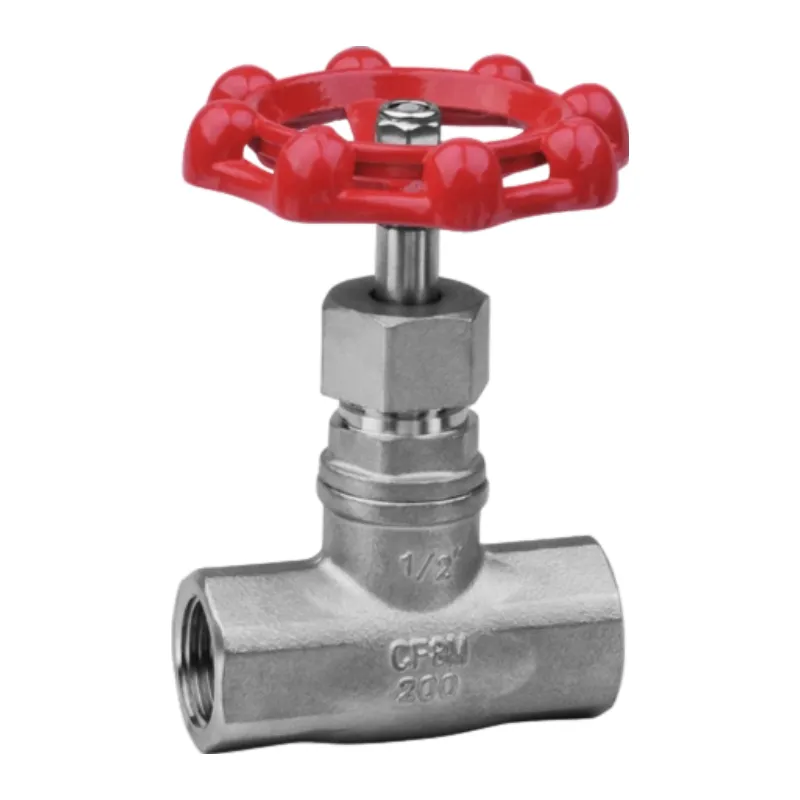
In a commercial HVAC system, one branch may need more chilled water while another needs less. A china globe valve for HVAC branch line control gives engineers a practical way to adjust flow without replacing the whole pipe network. Unlike a simple isolation valve, a globe valve changes the opening gradually. This makes it useful for balancing air-handling units, fan coil units, heating coils, and process cooling branches. When the valve is correctly sized and commissioned, it can help maintain design flow, reduce temperature complaints, and support stable pump operation.
HVAC water systems rarely have equal pipe lengths, coil sizes, or pressure conditions. A branch close to the pump may receive excessive flow, while a remote branch may receive too little. The result can be uneven room temperatures, noisy control valves, slow cooling, and higher pump energy use.
A butterfly valve or gate valve is often suitable for open-and-close service. However, these valves are not normally selected for frequent throttling. A globe valve uses a movable disc or plug and a shaped seat to control the passage area. The operator can move the disc through a controlled stroke, which allows more accurate flow adjustment.
For example, a branch designed for 2.0 m³/h should not be allowed to receive 3.0 m³/h simply because it is close to the pump. Excess flow may not improve comfort. It can increase pressure loss across the coil, create water noise, and reduce the available differential pressure for other branches. Proper throttling helps the system stay closer to its design condition.
A globe valve is a linear-motion valve used to regulate, start, or stop fluid flow. In HVAC water systems, the valve body normally contains an inlet, an outlet, a seat, and a disc or plug connected to a stem. Turning the handwheel or moving the actuator changes the distance between the disc and the seat.
The term China globe valve describes a globe valve manufactured in China. It does not by itself define the valve’s quality, pressure rating, materials, or control performance. Buyers should review the actual specification, factory quality system, inspection records, and test results.
Several technical terms are important:
For HVAC projects, the valve should also be checked for water temperature, glycol concentration, pressure differential, actuator compatibility, and installation position. A valve that works well with clean chilled water may need different materials or seals when the system contains glycol or treatment chemicals.
The basic relationship between water flow, pressure loss, and valve capacity is commonly expressed as:
Q = Kv × √ΔP
Here, Q is the flow rate in cubic meters per hour, Kv is the valve flow coefficient, and ΔP is the pressure loss across the valve in bar. The exact formula can vary by fluid and unit system, but the principle remains useful during valve selection.
Suppose a branch requires 2.0 m³/h and the design pressure drop across the control valve is 0.25 bar. The estimated Kv is:
Kv = 2.0 ÷ √0.25 = 4.0
This does not mean the buyer should select a valve with exactly Kv 4.0. Engineers normally check the valve authority, operating range, minimum flow, maximum flow, and available pump pressure. Still, the calculation shows why selecting only by pipe size can create problems. A DN50 valve may be too large for a small branch if its control capacity is much higher than the actual design flow.
Valve authority is another important concept. It compares the pressure drop across the control valve with the total pressure drop of the controlled circuit. A low-authority valve may cause unstable control because a small change in valve position produces a large change in flow. Many HVAC design practices aim for a valve authority near 0.3 or higher, although the final value depends on the system and control strategy.
Chilled water systems use globe valves to regulate flow through air-handling unit coils, fan coil units, and terminal cooling branches. The valve can be installed on the supply or return side according to the design drawings and actuator requirements.
In a chilled water circuit, a common design temperature difference may be 5–7°C, depending on the project. If a coil removes 35 kW of heat and the water temperature difference is 6°C, the required water flow is approximately:
Flow ≈ 35 ÷ 4.186 × 6 = 1.39 kg/s
After converting units, this is about 5.0 m³/h for water. The final selection must include coil pressure loss, pipe resistance, valve pressure drop, and the actual fluid density. This example shows why the valve must be selected from thermal duty and hydraulic data rather than from pipe diameter alone.
Globe valves are also used on hot water coils, radiators, heat exchangers, and perimeter heating branches. The valve may control the water flow based on room temperature, supply-air temperature, or return-water temperature.
Heating systems often operate at higher water temperatures than chilled water systems. The selected body, seat, packing, and actuator must therefore meet the project’s maximum operating temperature. Seals should also be checked for compatibility with glycol mixtures and water-treatment chemicals.
An air-handling unit may serve several zones with different loads. A globe valve can control the coil branch while a temperature sensor and actuator adjust the opening. In a fan coil unit, the valve may respond to a room thermostat.
Two-way valves are commonly used in variable-flow systems. Three-way globe valves may be used when the design requires mixing or diverting flow. The choice depends on the piping arrangement, pump control, coil design, and building automation sequence.
District energy systems require careful control because the available pressure can change as many connected buildings alter their load. Globe valves may be used for branch regulation, bypass service, pressure control arrangements, and equipment isolation when the design calls for throttling capability.
Factories, data centers, laboratories, and clean production areas often need stable cooling water. A globe valve can regulate flow to heat exchangers, production equipment, precision air-conditioning units, and secondary cooling loops.
In these applications, the buyer should confirm whether the fluid is ordinary water, treated water, glycol solution, or another liquid. Fluid composition affects corrosion, seal life, and valve performance.
The main advantage is controlled flow adjustment. A correctly selected globe valve can produce a predictable change in flow as the disc moves. This is valuable during commissioning, seasonal load changes, and automatic temperature control.
However, a globe valve is not automatically the best choice for every HVAC location. Its internal path usually creates more pressure loss than a full-port isolation valve. If the valve is permanently open, a lower-resistance valve may be more suitable. If automatic control is required, the valve must be matched with the actuator and the building management system.
Start with the fluid. Record whether the system uses chilled water, hot water, glycol water, condensate, or another medium. Then confirm the normal and maximum temperature.
For example, a 30% glycol solution does not behave exactly like water. Its viscosity and density influence flow resistance and valve sizing. The manufacturer should provide the permitted concentration range and temperature limits for the body, seals, and trim.
For a water coil, flow can be estimated from the heat load:
Flow = Heat load ÷ (Specific heat × Temperature difference)
Use consistent units and then verify the result against the coil manufacturer’s data. The valve should operate within a useful part of its stroke rather than staying almost closed or almost fully open.
Ask the designer or supplier to show the expected pressure drop at minimum, normal, and maximum flow. A valve that is too large may have poor control resolution. A valve that is too small may create excessive pressure loss and reduce available flow.
The available pump head must also be considered. If the pump has only 0.8 bar available at the branch and the selected valve consumes 0.7 bar, the remaining pressure may not be enough for the coil and pipe network.
Common valve body materials include cast iron, ductile iron, carbon steel, stainless steel, and bronze. The choice depends on pressure, temperature, corrosion risk, connection type, and project specifications.
For ordinary closed-loop HVAC water, carbon steel or ductile iron may be suitable for larger valves. Bronze or stainless steel may be selected for smaller valves or more demanding fluid conditions. The material must be confirmed through the project specification rather than assumed from the product name.
The actuator must provide enough force or torque to move the valve under the highest differential pressure. It should also match the control signal, such as 0–10 V, 4–20 mA, floating control, or on/off control.
Check these points before ordering:
The valve connection must match the pipe. A flanged valve requires correct flange dimensions, gasket selection, bolt length, and alignment. A threaded valve requires compatible thread standards and enough clearance for maintenance.
Globe valves also require space for stem movement and actuator removal. Installing the actuator against a wall or above an inaccessible ceiling can make future service difficult. The arrow on the valve body should match the intended flow direction unless the manufacturer permits another arrangement.
HVAC valve specifications often refer to recognized standards such as ASME, ASTM, API, EN, ISO, or equivalent national standards. The correct standard depends on the valve type, pressure class, materials, test method, and project location.
For a commercial order, request technical documents before production:
Pressure testing should include the body and seat according to the applicable standard and purchase specification. The inspection plan may include visual inspection, dimensional checks, shell testing, seat leakage testing, coating inspection, and sample-based material verification.
A factory audit can add further confidence. Review machining equipment, assembly areas, calibration records, traceability, packing methods, and corrective-action records. ISO 9001 certification can show that a quality management system exists, but it does not replace product-specific inspection.
Inspect the valve for transport damage. Confirm the size, pressure rating, flow direction, connection type, and actuator model. Remove dirt from the pipe and check that no welding slag or metal chips can enter the valve.
Support the pipe independently. Do not use the valve body to carry pipe weight. Align the pipe flanges carefully so that the valve is not forced into position. Excessive stress can deform the body or damage the seat.
Install strainers upstream when the system design requires them. Dirt can scratch the seat, block the trim, or cause actuator overload. Leave enough space for handwheel operation, stem travel, actuator removal, and packing adjustment.
Follow the project test pressure and duration. Protect the actuator if it is not rated for the test medium or pressure. After testing, flush the system and clean strainers before placing the control valve into service.
Measure flow and differential pressure rather than relying only on valve position. A valve that is 50% open does not necessarily provide 50% of the design flow. Record the final setting, measured flow, supply temperature, return temperature, and pressure drop.
For automatic systems, check the sensor location and control sequence. A correctly sized valve can still perform poorly if the temperature sensor is installed in the wrong position or if the actuator signal is reversed.
Possible causes include a blocked strainer, trapped air, insufficient pump head, incorrect valve direction, undersized piping, or an actuator that is not opening fully. Check differential pressure at the valve and compare it with the design calculation.
Noise may occur when the pressure drop is too high, the valve is oversized, air is present in the system, or the flow velocity is excessive. Reducing the pressure drop, correcting the valve size, removing air, or changing the control sequence may solve the problem.
The valve may be undersized, the coil may be dirty, the sensor may be poorly located, or the system may have low water flow. Measure both water temperatures and confirm the actual flow before replacing the valve.
Seat contamination, damaged trim, incorrect actuator calibration, or excessive differential pressure can cause leakage. Close-off pressure should be compared with the actuator’s rated force. If the seat is damaged, repair or replacement may be required.
Check the stem coupling, stroke direction, control signal, valve characteristic, and mechanical travel. A linear actuator installed on a valve with the wrong stroke length may leave part of the seat area unused.
Valve selection should follow the job rather than a fixed preference.
| Valve type | Typical HVAC role | Main strength | Important limitation |
|---|---|---|---|
| Globe valve | Throttling and modulating control | Good control precision and actuator compatibility | Higher pressure loss than many isolation valves |
| Butterfly valve | Large-pipe isolation and some control service | Compact design and lower weight at large sizes | Control accuracy depends strongly on design and operating range |
| Ball valve | Small pipe isolation and on/off control | Quick operation and low resistance when fully open | Standard full-port designs may not be ideal for continuous throttling |
| Gate valve | Full-open or full-closed isolation | Low resistance when fully open | Not normally recommended for regular throttling |
For a branch that requires frequent adjustment, a globe valve is often a strong option. For a main pipe that only needs isolation during maintenance, a butterfly or gate valve may offer lower resistance and simpler operation.
Price is only one part of the purchase decision. Compare the valve’s pressure rating, tested leakage, materials, flow coefficient, actuator performance, delivery time, spare parts, and warranty terms.
Ask suppliers to quote against the same technical schedule. The schedule should state:
A supplier that asks for flow, pressure, temperature, and control details is more likely to recommend a suitable valve than one that quotes only from the pipe size. For large projects, request a sample or a witnessed inspection before full shipment.
A globe valve can improve branch line control, but its performance depends on correct sizing, clean water, suitable materials, proper actuator selection, and measured commissioning. Start with the HVAC design data. Calculate the required flow, confirm the available pressure, select the valve coefficient, and then check the body, trim, connection, and control package.
Before placing an order, review the technical datasheet and installation manual. After installation, record actual flow and differential pressure so future maintenance teams can identify changes quickly. If you are comparing options for a best China globe valve supplier for HVAC, discuss the complete operating condition with Chenyu Valve and request a product selection based on your branch flow, pressure, temperature, and actuator requirements.
A: When selecting a globe valve, consider the nominal size, pressure rating, flow coefficient, and the materials of the body and trim. Ensure the valve matches the fluid type, temperature, and installation requirements.
A: Calculate Kv using the formula Kv = Q ÷ √ΔP, where Q is the desired flow rate, and ΔP is the pressure drop across the valve. It's crucial to evaluate this against the system's design to avoid oversized or undersized valves.
A: Ensure to inspect the valve for damage prior to installation, support the pipeline independently, and verify that the valve's flow direction and connection type match the system design to prevent operational issues.
A: We provide comprehensive service including technical support for valve selection, installation guidance, maintenance advice, and the option for custom configurations to meet specific project requirements.
A: Our globe valves are manufactured under stringent quality control standards, providing competitive pricing without compromising on quality. We offer testing documentation and material certifications to ensure product reliability.
Related News

Aug. 14, 2026
Related Products
Navigation
Navigation
Contact Us
Contact Us
E-mail: abby_zcyvalves@zcyvalve.com
Mobile: +86 133 9699 8344
WeChat: +86 158 8872 1646
WhatsApp: +8615888721646
Add.: Room 401, 4F, NO.1017, JinHai 3rd Avenue, Kong Gang New Zone, Yong Xing Street, Long Wan District, Wen Zhou City, Zhe Jiang, P.R. China.


