
Aug. 06, 2026
Self-contained hydraulic actuation on a ball valve combines a quarter-turn valve, hydraulic actuator, hydraulic power source, control circuit, and fail-safe mechanism in one operating package. Compared with pneumatic or electric systems, it can provide high torque in compact installations and maintain a defined emergency position after power loss. Chinese and German configurations should be compared by actuator sizing, valve materials, pressure class, testing, documentation, delivery controls, maintenance, and total cost—not by country of origin alone.
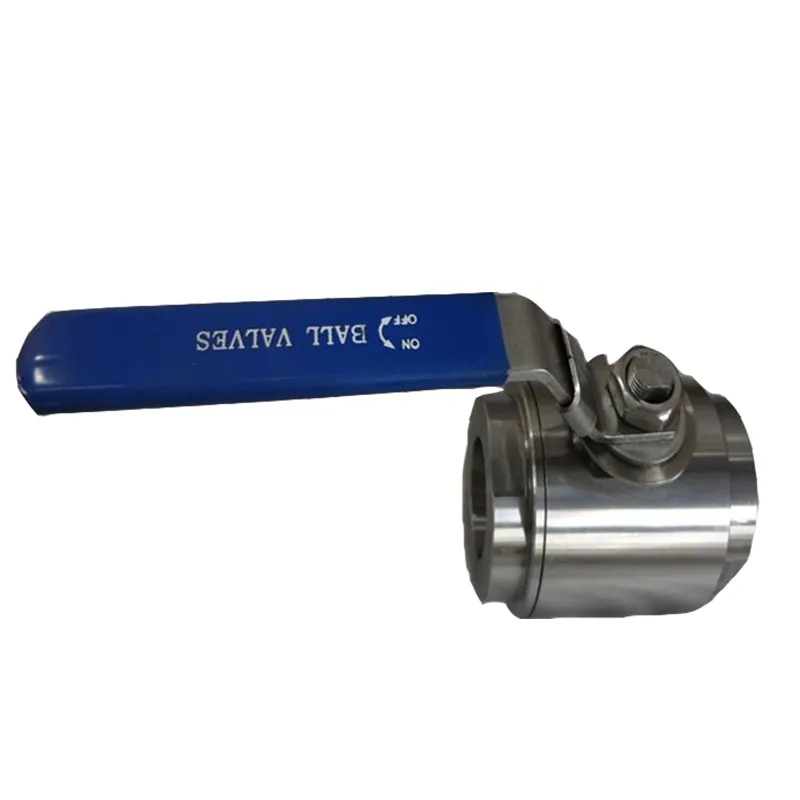
Before comparing Chinese vs. German ball valves, define the operating envelope in a written datasheet. The minimum information should include nominal size, pressure class, design temperature, fluid composition, flow direction, required shutoff class, operating frequency, installation location, and emergency position. Without these values, a price comparison can produce two packages that are not technically equivalent.
For trunnion-mounted ball valves with hydraulic actuators, buyers should also record the breakaway torque, running torque, seating torque, maximum differential pressure, and required closing time. A trunnion-mounted design is commonly selected for larger diameters and higher pressure classes because the ball is supported by trunnions while spring-loaded seats maintain contact with the ball. Chenyu’s product information identifies trunnion ball valves for high-pressure service, including pressure classes from Class 600 to Class 2500, although the final actuator selection must be confirmed against the exact valve model. (chenyuvalves.com)
The procurement file should include a compliance matrix covering API 6D, API 608, ASME B16.34, ISO 5211, API 598, fire-safe requirements, NACE requirements where sour service applies, and any project-specific inspection plan. A supplier should identify which standard applies to design, which applies to testing, and which applies to actuator mounting or control equipment. A general statement such as “manufactured according to international standards” is not enough for a safety-critical purchase.
A self-contained hydraulic ball valve actuator uses stored or locally generated hydraulic energy to rotate the valve stem through approximately 90 degrees. Its main components normally include a hydraulic cylinder, reservoir or accumulator, pump or charging circuit, solenoid valves, pressure regulators, manual override, position indicators, and control logic. During normal operation, hydraulic pressure moves the piston; a rack-and-pinion, Scotch-yoke, or crank mechanism converts linear piston motion into quarter-turn rotation.
The actuator must deliver enough torque for three separate conditions: initial breakaway from the seat, continuous rotation against line and packing resistance, and final seating at the closed or open position. A common sizing error is to compare only the nominal valve torque while ignoring low-temperature seat friction, differential pressure, corrosion deposits, packing compression, or emergency shutdown conditions. A practical engineering margin is often specified by the project, but the supplier should state the exact design margin and the torque curve rather than provide an unsupported percentage.
The operating sequence begins when a control signal opens a hydraulic directional valve. Pressurized fluid enters one side of the actuator cylinder, pushing the piston and rotating the ball through a linkage or rack mechanism. When the command ends, hydraulic pressure is isolated, and the actuator holds position through hydraulic locking, a spring-return assembly, or an accumulator-based circuit.
For an emergency shutdown system, stored hydraulic energy can drive the valve to a defined safe position after electrical power, instrument air, or an external hydraulic supply is lost. A spring-return actuator may fail closed or fail open, while a double-acting system may use an accumulator and pilot valves to provide the required emergency movement. Buyers should require a measured response time, such as “close within 10 seconds under stated pressure and temperature,” instead of accepting terms such as “rapid shutdown.”
A self-contained arrangement can reduce dependence on a distant hydraulic power unit, but it adds components that must be inspected. The hydraulic reservoir, accumulator pressure, filters, tubing, seals, solenoid valves, and control panel become part of the maintenance program. The supplier should state the hydraulic fluid type, normal operating pressure, minimum ambient temperature, relief-valve setting, accumulator pre-charge, and manual override procedure.
Ball valves are quarter-turn devices, so the actuator output shaft must match the valve stem rotation and mounting pattern. ISO 5211 mounting dimensions help standardize actuator attachment, but mounting compatibility does not prove that the actuator has sufficient torque. The procurement specification should show the valve stem dimensions, mounting flange, drive-square or key arrangement, maximum allowable stem torque, and actuator output torque at minimum supply pressure.
Floating ball valves generally require increasing seating force as line pressure presses the ball against the downstream seat. Trunnion-mounted valves use a supported ball and spring-loaded seats, which can reduce operating torque for larger or higher-pressure designs, but actuator sizing still depends on seat construction, pressure direction, temperature, and sealing materials. A supplier should submit a torque table for open, running, and closed positions at the specified pressure and temperature.
The following calculation structure can be used during technical review:
| Sizing item | Required information | Buyer verification |
|---|---|---|
| Breakaway torque | Torque required to start movement | Review test data or design calculation |
| Running torque | Torque during 90-degree rotation | Check at minimum and maximum pressure |
| Seating torque | Torque required for final shutoff | Confirm against leakage requirement |
| Safety margin | Project-defined additional capacity | Require stated percentage or factor |
| Actuator output | Torque at minimum hydraulic pressure | Compare with maximum valve demand |
| Cycle time | Full open or close time | Witness functional test |
| Emergency action | Fail-open or fail-closed position | Test after loss of power or pressure |
Hydraulic actuation is generally selected when the valve requires substantial torque, compact equipment, or a defined emergency response. It can provide high force from a relatively small cylinder and can store energy in an accumulator. Its disadvantages include fluid leakage risk, filtration requirements, seal aging, and additional hydraulic components.
Pneumatic actuation is widely used where clean instrument air is already available. It has a simpler energy medium than hydraulic oil, but the compressor, air receiver, dryers, tubing, and air quality system must be included in the installation analysis. Pneumatic output can also vary when supply pressure falls or when large actuators consume significant air during repeated cycling.
Electric actuation is suitable where electrical power, precise positioning, and straightforward local control are priorities. It avoids hydraulic-fluid maintenance but may require larger motors, thermal protection, gearboxes, and battery or backup-power systems for emergency operation. For a safety shutdown valve, the buyer must assess whether the electric actuator can reach the required position within the specified time after a power interruption.
| Actuation type | Main energy source | Typical advantage | Main verification issue |
|---|---|---|---|
| Hydraulic | Hydraulic pressure or accumulator | High torque and stored emergency energy | Leakage, filtration, accumulator condition |
| Pneumatic | Instrument air | Simple energy medium where air is available | Air pressure, air quality, compressor capacity |
| Electric | Electrical power | Direct control and easy signal integration | Backup power, motor sizing, thermal limits |
The phrase “Chinese vs German valve quality” is too broad to support a purchase decision. Manufacturing quality depends on the approved design, raw-material controls, machining tolerances, welding procedures, heat treatment, assembly process, inspection equipment, and documentation system. German suppliers may offer mature documentation packages and established certification structures, while Chinese suppliers can provide equivalent technical configurations when the purchase specification and inspection plan are enforced.
Material verification is one of the most important differences between a quotation and a controlled supply package. Buyers should request heat numbers, chemical composition records, mechanical-property certificates, heat-treatment records, and positive material identification for pressure-boundary components. For sour-service or corrosive applications, the records should also address the specified material standard, hardness limits, and environmental requirements.
Dimensional control should cover body bore, ball diameter, stem geometry, seat pocket dimensions, flange drilling, face-to-face length, and actuator mounting dimensions. The allowable tolerance must be stated on the drawing or inspection plan. For example, a supplier may need to demonstrate flange dimensions according to ASME B16.5 or B16.47, face-to-face dimensions according to the applicable valve standard, and ISO 5211 compliance for the actuator mounting interface.
Chenyu Valve identifies carbon-steel and stainless-steel valves as part of its product range and lists materials including WCB, WCC, LCB, CF8, CF8M, CF3M, duplex 2205, and other alloys. Its published ball-valve information also references API, ASME, GB, BS, DIN, and JIS requirements, with API 598 testing identified for certain product configurations. These statements should be treated as a starting point for document review; the purchaser should confirm the exact standard, material grade, and test scope in the purchase order. (chenyuvalves.com)
A factory acceptance test should be based on an approved inspection and test plan rather than a general certificate. The minimum inspection package for an industrial ball valve may include visual inspection, dimensional inspection, material-certificate review, shell pressure testing, seat leakage testing, air testing, actuator functional testing, and position-switch verification. API 598 is commonly used for valve pressure and leakage testing, while project requirements may add fire-safe, fugitive-emission, cryogenic, or functional-cycle testing.
For self-contained hydraulic actuation, testing should cover the complete valve-and-actuator assembly. The inspector should record hydraulic supply pressure, actuator output direction, open and closed positions, operating time, emergency response time, manual override operation, pressure retention, and alarm signals. If the actuator uses an accumulator, the test should include the loss of normal power or hydraulic charging and confirm that the valve reaches the specified safe position.
The following documents should be requested before shipment:
Chenyu’s published quality information states that valves undergo shell, sealing, and air tests before dispatch, and its FAQ describes pre-production samples and final inspection before shipment. For a critical project, buyers should convert those general statements into an agreed inspection plan with acceptance criteria, witness points, instrument calibration requirements, and release-document deadlines. (chenyuvalves.com)
Oil and gas pipelines often require trunnion-mounted ball valves, fire-safe construction, low-emission packing, and emergency shutdown functionality. The actuator must close against the maximum specified differential pressure while maintaining the required leakage class. For remote pipeline locations, accumulator capacity, local manual override, corrosion protection, and spare-part logistics may influence the decision more than the initial valve price.
Chemical-processing systems require compatibility between the body, ball, stem, seats, packing, hydraulic fluid, and process medium. Stainless steel, duplex alloys, metal seats, or special coatings may be needed for acids, solvents, chlorides, hydrocarbons, or elevated temperatures. The supplier should receive the full media composition and temperature range because selecting a valve solely by nominal pressure can cause seat swelling, corrosion, or accelerated stem wear.
Water-treatment installations often prioritize corrosion resistance, low operating cost, and accessible maintenance. Electric or pneumatic actuators may be suitable where utilities are available, while self-contained hydraulic actuation may be justified for large isolation valves or locations with unreliable power. The lifecycle review should include actuator enclosure protection, hydraulic-fluid replacement, local access, and the cost of taking a pump or treatment train out of service.
Power-generation and heavy-industry systems can involve high temperature, abrasive solids, frequent cycling, or restricted maintenance windows. Valve selection should therefore include thermal expansion, seat material, stem bearing design, actuator duty cycle, and the availability of replacement seals. A valve that meets pressure requirements but cannot complete the specified number of cycles at operating temperature is not an equivalent alternative.
Fail-closed operation is commonly selected when continued flow could increase fire, explosion, contamination, or equipment-damage risk. Fuel-gas isolation, chemical-feed lines, and emergency process isolation may require the valve to close after loss of power or control pressure. The required closing time must be tested under the actual emergency energy condition, not only under normal hydraulic pressure.
Fail-open operation may be selected for cooling-water, depressurization, or systems where continued flow prevents overheating. Some applications require fail-in-place rather than fail-open or fail-closed, particularly when sudden movement could create a greater hazard. The cause-and-effect diagram should define the safe position, initiating signal, energy-loss condition, local override behavior, and reset procedure.
The comparison between Chinese and German equipment should include the safety function as a complete system. Review the actuator, accumulator, solenoid valve, hydraulic circuit, limit switches, control logic, and power supply together. A valve body from one country and an actuator from another can perform correctly, but only if their torque, mounting, control, and emergency-response requirements are verified as one assembly.
Purchase price is only one part of hydraulic ball valve lifecycle cost. A lower-priced valve may create additional expenses through engineering review, inspection travel, customs handling, spare-parts stocking, commissioning support, or longer downtime when a seal or actuator component is unavailable. A higher-priced German package may reduce documentation effort or qualification risk, but the benefit should be expressed in measurable hours, avoided failures, or reduced maintenance exposure.
A practical total-cost model can be structured as follows:
| Cost category | Chinese supply example | German supply example | How to verify |
|---|---|---|---|
| Valve and actuator purchase | $8,000–$18,000 | $16,000–$35,000 | Comparable specification and quantity |
| Engineering and approval | $1,000–$4,000 | $1,000–$3,000 | Document review hours |
| Inspection and testing | $500–$3,000 | $500–$2,500 | FAT, third-party witness, travel |
| Installation and commissioning | $2,000–$6,000 | $2,000–$6,000 | Site labor and hydraulic integration |
| Initial spare parts | $500–$2,000 | $1,000–$4,000 | Seal kits, solenoids, filters |
| Annual maintenance allowance | $400–$1,500 | $300–$1,200 | Service interval and labor rate |
| Downtime exposure | Project-specific | Project-specific | Production loss per hour |
These figures are an illustrative budgeting range, not a quotation or performance guarantee. The comparison becomes useful only when both suppliers quote the same size, pressure class, material, seat design, actuator torque, fail-safe mode, testing scope, coating system, documentation, delivery term, and warranty. A $10,000 purchase-price difference can disappear if one package requires an additional three days of commissioning or a six-week spare-part delay during an outage.
For example, assume a valve train loses $12,000 per hour during an unplanned shutdown. If a locally stocked spare actuator reduces recovery time by eight hours, the avoided downtime exposure is $96,000. That figure may justify a higher initial price, but only if the spare is compatible, available, and supported by a documented replacement procedure.
Delivery risk should be measured through dates and milestones rather than general assurances. The purchase order should identify drawing-submittal date, drawing-approval date, material-procurement date, machining completion, hydrotest completion, FAT date, packing date, shipping date, and required arrival date. Chenyu states that normal-size valves may be stocked and that typical lead time generally ranges from 15 to 35 days depending on quantity, but buyers should confirm the exact delivery schedule for custom hydraulic actuator packages. (chenyuvalves.com)
A German supplier may have longer manufacturing queues for engineered or certified assemblies, while a Chinese supplier may offer shorter production time for standard configurations. Neither assumption should replace a written production schedule. The buyer should request a weekly progress update, escalation contact, document-register status, and notification process for material or testing delays.
Supplier evaluation should also include service location and spare-parts strategy. Ask whether replacement seals, hydraulic filters, solenoid valves, accumulator components, position switches, and manual-pump parts are available regionally. For equipment installed in remote oil and gas, mining, or power-generation sites, the cost of air freight and specialist labor should be included in the lifecycle model.
| Buyer priority | More suitable direction | Required controls |
|---|---|---|
| Class 150–600 utility isolation | Qualified Chinese or German supplier | Standardized datasheet, pressure testing, spare-parts list |
| Class 600–2500 pipeline service | Supplier with verified trunnion design | Torque calculation, material traceability, FAT |
| Critical emergency shutdown | Supplier with documented fail-safe testing | Cause-and-effect test, response-time record, backup energy test |
| Sour-gas or corrosive service | Supplier experienced with specified alloys | NACE and material compliance, PMI, hardness records |
| Short project schedule | Supplier with material or product availability | Confirmed stock, production plan, inspection dates |
| Remote installation | Supplier with regional support or stocked spares | Maintenance manual, spare actuator parts, service response |
| Lowest initial capital cost | Qualified Chinese manufacturer | Third-party inspection, complete documentation, clear warranty |
| Maximum documentation depth | Supplier with established project certification process | Document index, certificates, approved ITP, traceability |
Start with the process hazard and required safe position. Define whether the valve must fail open, fail closed, or remain in place, then calculate the energy required to complete that movement after normal power or hydraulic supply is lost. This step determines whether the package needs a spring-return design, accumulator, redundant solenoids, manual override, or an alternative actuator arrangement.
Next, select the valve construction and pressure class. Use floating ball valves for appropriate low-to-medium pressure applications and consider trunnion-mounted designs for larger diameters or higher pressure service. Confirm full-bore or reduced-bore requirements, pigging needs, allowable pressure drop, seat materials, fire-safe requirements, and temperature limits.
Then verify actuator compatibility and testing. Require a torque curve, mounting drawing, hydraulic schematic, control-voltage data, cycle-time calculation, and fail-safe sequence. During FAT, record the actual hydraulic pressure, actuator torque or thrust where measurable, open-close time, limit-switch settings, leakage result, and emergency response.
Finally, compare lifecycle cost using the same commercial basis. Include valve price, actuator package, hydraulic accessories, inspection, freight, installation, commissioning, scheduled maintenance, spare parts, training, and downtime exposure. Chenyu Valve presents itself as a manufacturer rather than a trading company, reports more than 10 years of experience and more than 100 employees, and states that its products serve petrochemical, metallurgy, power, environmental, food, pharmaceutical, and construction sectors; buyers should still verify project-specific references and records for the exact valve and actuator package. (chenyuvalves.com)
Comparing Self-Contained Hydraulic Actuation on Chinese vs. German Ball Valves requires a technical and economic comparison rather than a country-of-origin judgment. A qualified Chinese package can be suitable when it provides traceable materials, defined tolerances, API or project-required testing, verified actuator torque, documented fail-safe behavior, and a delivery plan supported by inspection milestones. German equipment may be preferable when the project requires a specific certification history, established regional service, or extensive documentation for highly critical assets.
The next step is to issue one identical datasheet and inspection plan to both supplier groups. Require the same pressure class, body and trim materials, seat design, actuator torque margin, emergency mode, cycle time, FAT scope, document register, spare-parts package, and delivery date. Then calculate the five-year lifecycle cost using purchase price, installation, maintenance, spare parts, service labor, and downtime exposure.
For standard industrial isolation, a controlled Chinese supply route may provide a lower capital cost and shorter lead time. For critical pipelines, chemical systems, or emergency shutdown service, the preferred supplier should be the one that proves compliance through test records and traceability. That is the practical basis for selecting Chinese or German self-contained hydraulic ball valves in 2026.
A: Chenyu Valve manufactures industrial ball valves in stainless steel and carbon steel, including trunnion-mounted configurations. For a hydraulic actuator package, provide the valve size, pressure class, operating torque, mounting requirements, fail-safe mode, cycle time, and service conditions so actuator compatibility can be reviewed for the complete assembly.
A: Available material options include carbon steel and stainless steel grades such as WCB, WCC, LCB, CF8, CF8M, CF3M, and duplex 2205, subject to the specific product configuration. Buyers should specify the process medium, temperature, pressure, corrosion conditions, and any sour-service requirements before requesting a quotation.
A: Include nominal size, pressure class, floating or trunnion-mounted design, full-bore or reduced-bore construction, body and trim materials, seat type, design temperature, maximum differential pressure, breakaway/running/seating torque, actuator mode, fail-open or fail-closed position, required operating time, control voltage, testing scope, documentation, delivery location, and spare-parts requirements.
A: Request the approved datasheet and drawings, bill of materials, material certificates, heat-treatment or welding records where applicable, dimensional inspection reports, shell and seat pressure-test records, actuator functional and torque-test records, fail-safe response testing, calibration certificates, coating records, operation and maintenance manuals, and a spare-parts list. The final inspection scope should be agreed in the purchase order or inspection and test plan.
A: Chenyu Valve identifies itself as a valve manufacturer and factory rather than a trading company, with products used in petrochemical, metallurgy, power, environmental, food, pharmaceutical, and construction applications. Normal-size valves may be stocked, while typical lead time is generally 15–35 days depending on quantity; custom high-pressure or hydraulic-actuated packages require confirmation of material availability, engineering approval, testing dates, and delivery terms.
Related News
Related Products
Navigation
Navigation
Contact Us
Contact Us
E-mail: abby_zcyvalves@zcyvalve.com
Mobile: +86 133 9699 8344
WeChat: +86 158 8872 1646
WhatsApp: +8615888721646
Add.: Room 401, 4F, NO.1017, JinHai 3rd Avenue, Kong Gang New Zone, Yong Xing Street, Long Wan District, Wen Zhou City, Zhe Jiang, P.R. China.


