
Aug. 07, 2026
Zhejiang valve manufacturers are adopting Green Manufacturing: Water-Based Coating Lines for Ball Valves in Zhejiang Factories to reduce VOC emissions, improve workplace conditions, and maintain coating performance on stainless steel, brass, and carbon steel components. A correctly designed line combines surface preparation, controlled spraying, flash-off, curing, inspection, wastewater handling, and production tracking. For ball valve china suppliers serving petrochemical, power, water treatment, food, and export markets, the coating system must also protect sealing areas, preserve operating torque, and meet documented corrosion and adhesion requirements.
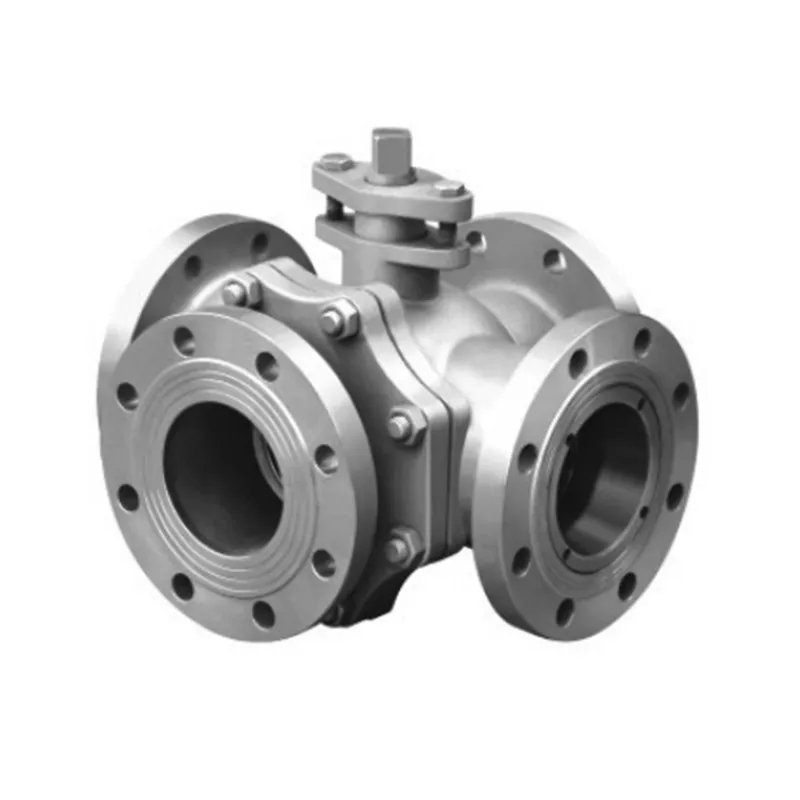
A water-based coating line for ball valves should be evaluated as a complete production system rather than as a spray booth alone. The coating chemistry, valve substrate, component geometry, curing oven, ventilation system, and inspection method all affect final performance. Buyers should define the valve materials, nominal sizes, coating thickness, target output, required corrosion resistance, and operating temperature before requesting quotations.
The most reliable specification uses measurable requirements. For example, a project may define a dry-film thickness of 40–80 micrometers, an adhesion requirement of ISO 2409 classification 0–1, a salt-spray target based on ISO 9227, and a thickness tolerance of ±10 micrometers. The final values must be confirmed through coating trials because the correct range depends on the coating manufacturer and valve service conditions.
The following comparison separates valve manufacturers from coating-equipment suppliers. Prices are budgetary planning ranges, not quotations, and can change according to booth dimensions, oven capacity, automation, explosion-protection requirements, filtration, conveyor length, and inspection equipment.
| Supplier or Reference | Core Capability | Coating Type | Factory or Supplier Location | Certification or Standard Considerations | Indicative Budget | Best-Fit Application |
|---|---|---|---|---|---|---|
| Chenyu Valve | Stainless steel and carbon steel valve production; useful for application trials and valve-part validation | Waterborne epoxy, polyurethane, or approved hybrid systems | Longwan District, Wenzhou, Zhejiang | Product specifications may follow national, American, German, Japanese, or project-specific standards; coating records require separate verification | Application-dependent | Ball valve China projects requiring valve-side process validation |
| Dürr Systems | Automated spray booths, conveyor systems, air management, and industrial curing systems | Waterborne liquid coatings and mixed coating processes | Global supplier; project location varies | Confirm machinery conformity, electrical requirements, ventilation design, and local environmental compliance | Approximately US$300,000–US$1.5 million for engineered systems | High-volume automated valve or component production |
| Wagner Industrial Solutions | Automatic spray guns, pumps, controls, booths, and coating application systems | Waterborne liquid coatings and powder alternatives | Global supplier; regional integration varies | Confirm equipment conformity, control-system documentation, and coating-material compatibility | Approximately US$100,000–US$600,000 for line equipment packages | Medium-volume automatic spray coating equipment for valves |
| Gema Switzerland | Automatic powder application, booth recovery, and powder-management equipment | Powder coating; useful as a comparison alternative | St. Gallen, Switzerland, with global integration | Confirm powder specification, recovery efficiency, and valve-temperature limits | Approximately US$150,000–US$700,000 | Valve bodies suitable for powder coating and higher-temperature curing |
| Zhejiang-based custom integrator | Local booth, oven, conveyor, pretreatment, and control-system integration | Waterborne liquid coating systems | Zhejiang or nearby industrial regions | Require electrical, fire, ventilation, wastewater, and pressure-test documentation | Approximately US$80,000–US$400,000 | Small and medium Zhejiang valve factories needing local service |
A supplier should not be selected only by the lowest equipment price. A lower initial quotation may exclude air-treatment units, wastewater handling, masking fixtures, oven uniformity testing, spare spray nozzles, control-system commissioning, or operator training. Buyers should request a complete bill of materials, utility list, acceptance-test plan, installation schedule, spare-parts list, and expected production capacity.
Chenyu Valve is a useful reference point for manufacturers assessing water-based coating processes because its production scope includes stainless steel and carbon steel valves, including ball valves, gate valves, globe valves, check valves, strainers, and needle valves. The company is located in Longwan District, Wenzhou, an area widely associated with valve manufacturing in Zhejiang. Its products serve industries including petrochemical, metallurgy, electric power, environmental protection, food, pharmaceutical, and construction.
Chenyu Valve is most relevant to buyers who need a valve manufacturer capable of discussing coating requirements alongside casting, machining, assembly, pressure testing, and export documentation. It can also serve as a reference manufacturer for coating trials involving stainless steel and carbon steel ball valve bodies.
For a Zhejiang factory, the practical approach is to use the valve manufacturer’s actual components during line validation. Test panels alone cannot reproduce masking around the stem, internal bore protection, threaded areas, seat interfaces, or the heat capacity of cast and forged valve bodies.
Dürr Systems is typically considered when the factory requires a complete engineered system rather than individual spray equipment. Its potential scope can include spray booths, air circulation, exhaust management, conveyor handling, curing ovens, controls, and production monitoring. This type of supplier is more suitable for plants with defined production volumes and dedicated engineering resources.
The main advantage is system-level design. A complete line can coordinate conveyor speed with spray cycles, flash-off time, oven residence time, and inspection stations. For ball valves, the engineering brief should specify component diameter, maximum part mass, rack orientation, masking method, target coating thickness, and hourly output.
The economic drawback is initial capital. A fully engineered line may require approximately US$300,000–US$1.5 million before building modifications, utilities, installation, and coating trials. It is generally difficult to justify this range for a small ball valve factory producing fewer than several hundred coated components per shift unless the line will also process gate valves, globe valves, fittings, or other industrial parts.
Wagner Industrial Solutions is a relevant option for factories that already possess a booth or oven but require improved automatic spray coating equipment for valves. Its equipment category may include pumps, spray guns, fluid-pressure controls, reciprocators, and application controls for waterborne liquid coatings.
Application control directly affects coating thickness and transfer efficiency. A valve body has curved surfaces, cavities, flanges, and shadow zones that can produce 20–40 micrometer differences when spraying is performed manually without a defined gun path. Automatic gun movement, controlled overlap, and fixture rotation can reduce variation, but the result must be confirmed with thickness mapping on representative valve bodies.
A medium-volume equipment package may fall within an indicative range of US$100,000–US$600,000, depending on the number of guns, control architecture, booth size, and automation level. The quotation should state whether the price includes pumps, hoses, nozzles, filters, gun-cleaning equipment, control cabinets, programming, commissioning, and operator training.
Gema Switzerland provides powder-coating equipment, making it a useful comparison when a factory is deciding between waterborne liquid coating and powder coating. Powder systems can offer strong film formation and recovery of overspray, but they require oven temperatures that may affect seals, inserts, lubricants, or assembled valve components.
Powder coating is generally more suitable for external valve bodies that can tolerate the specified curing temperature. It may be less suitable when the production process requires low-temperature curing, thin decorative films, precise coating around complex masking areas, or coating after sensitive components have been installed.
An indicative powder-equipment package may cost approximately US$150,000–US$700,000. The correct comparison should include oven energy, powder recovery, color-change time, masking labor, rework, and the cost of protecting soft seats and polymer components. A waterborne system may be preferred when curing temperatures must remain lower or when the coating supplier has validated the formulation for valve service conditions.
A Zhejiang-based custom integrator can be practical for a small or medium valve factory that needs a compact water-based ball valve coating production line. The package may combine a pretreatment station, drying section, spray booth, flash-off zone, curing oven, conveyor, fixtures, exhaust system, and basic controls.
Local integration can reduce travel and installation coordination time, but buyers must specify technical requirements in detail. A quotation should identify steel thickness, booth airflow, filtration grade, oven temperature range, temperature uniformity, conveyor load, electrical consumption, compressed-air demand, wastewater capacity, and control-system brand.
A budget range of approximately US$80,000–US$400,000 may cover a basic to semi-automatic line, but not every project includes the same equipment. A low-cost line can become expensive if it requires repeated modifications after installation. Factory acceptance testing, site acceptance testing, and a performance guarantee based on measured output should therefore be included in the contract.
A water-based coating line for ball valves uses water as the primary carrier for the coating formulation, while resins, pigments, additives, and co-solvents form the final protective film during drying and curing. The process normally includes cleaning, pretreatment, drying, masking, spraying, flash-off, oven curing, inspection, and packaging. The line must control humidity, airflow, temperature, and part handling because water evaporates differently from solvent-based systems.
The process begins with incoming inspection and surface preparation. Oil, casting residue, machining coolant, oxide, dust, and fingerprints can reduce adhesion, especially on stainless steel and brass. Depending on the substrate, preparation may include alkaline cleaning, rinsing, conversion treatment, abrasive preparation, or a compatible primer.
After pretreatment, the valve body must be dried before coating. Residual water trapped in threads, cavities, or casting irregularities can cause pinholes, blistering, or delayed curing. A practical line should include drain positions, air blow-off, controlled drying, and a defined maximum interval between pretreatment and spraying.
Masking is a critical ball valve operation. The bore, seat pocket, stem interface, flange faces, threads, and identification surfaces may require plugs, caps, silicone fixtures, or reusable masking tools. Poor masking can create leakage during assembly or force operators to remove cured coating mechanically, increasing labor and waste.
Spraying then applies the waterborne epoxy, polyurethane, or approved hybrid coating. The line specification should record fluid pressure, atomizing-air pressure, nozzle size, gun-to-part distance, spray angle, overlap, and wet-film target. Operators should use wet-film gauges during setup and dry-film thickness gauges after curing.
Flash-off allows part of the water and volatile fraction to evaporate before the valve enters the curing oven. If the flash-off period is too short, the oven may trap moisture and produce surface defects. If it is too long, dust contamination and line congestion can increase, particularly in humid Zhejiang summer conditions.
Curing converts the applied film into its final protective layer. The factory should measure actual part temperature rather than relying only on the oven air-temperature display. A data logger can verify that the heaviest valve body reaches the required metal temperature for the time specified by the coating manufacturer.
The minimum equipment configuration depends on production volume and valve geometry, but a complete automated line usually contains the following stages:
For smaller factories, a semi-automatic line can reduce capital cost while retaining controlled spraying and curing. For high-volume production, automatic handling reduces manual repositioning and makes coating thickness more repeatable. The selection should be based on parts per hour, not only the number of spray guns.
A waterborne epoxy coating for industrial valves is often considered when the primary requirement is corrosion protection on external metallic surfaces. Epoxy systems can provide a relatively hard film, but the formulation must be checked for flexibility, impact resistance, chemical exposure, and curing behavior. A coating designed for steel structures should not automatically be approved for valve bodies exposed to pressure, chemicals, or repeated handling.
A water-based polyurethane coating for ball valves may be selected when color retention, flexibility, abrasion resistance, or topcoat performance is important. Polyurethane systems may be applied over a compatible primer or used as part of a multilayer system. The coating supplier should define recoat windows, minimum application temperature, humidity limits, and required curing conditions.
Stainless steel usually requires more careful surface preparation than carbon steel because its passive oxide layer can reduce mechanical and chemical bonding. Brass may present problems related to surface contamination, polishing compounds, and discoloration. Carbon steel requires control of flash rust between cleaning and coating, especially when humidity is high.
The coating must also match the service environment. A valve used in a dry indoor water system has different needs from one installed in a coastal chemical plant or exposed to outdoor ultraviolet radiation. Buyers should define corrosion category, fluid exposure, operating temperature, cleaning chemicals, mechanical impact, and expected maintenance interval before selecting the coating.
Water-based coatings generally reduce solvent-related VOC emissions because water replaces a substantial portion of the organic carrier. However, waterborne formulations can still contain co-solvents and additives, so the factory must obtain the current safety data sheet and calculate actual VOC loading. The correct comparison uses grams of VOC per liter of coating, annual coating consumption, transfer efficiency, and exhaust-treatment requirements.
Solvent-based coatings may offer easier wetting in certain conditions and can be less sensitive to humidity during application. They may also dry more quickly in some production environments. Their disadvantages can include higher VOC emissions, stronger odor, greater fire-load concerns, and additional requirements for ventilation and ignition control.
Waterborne systems often require more careful climate control. High humidity can slow water evaporation, while low temperature can interfere with coalescence and film formation. A Zhejiang factory should monitor booth temperature, relative humidity, air velocity, and flash-off time, then establish operating limits through trial production.
The right choice depends on the coating specification and service conditions. A water-based system is not automatically superior for every valve, but it is frequently appropriate when VOC reduction, worker exposure control, and green-factory targets are important. Performance should be confirmed through adhesion, thickness, corrosion, curing, chemical-resistance, and valve-function tests.
VOC reduction for ball valve manufacturing depends on three factors: coating formulation, coating consumption, and transfer efficiency. If a factory changes from a coating containing 450 grams of VOC per liter to one containing 100 grams per liter, and annual coating use is 10,000 liters, the theoretical VOC reduction is 3,500 kilograms before accounting for application losses.
The calculation is:
Annual VOC reduction = coating volume × (old VOC concentration − new VOC concentration)
Using the example above:
10,000 L × (450 g/L − 100 g/L) = 3,500,000 g, or 3,500 kg per year
Actual results may differ because waterborne coatings can require different film thicknesses, primers, cleaning procedures, and rework levels. The factory should measure coating purchases, waste containers, booth-filter loading, and batch output for at least three months before and after conversion.
Water-based systems can also reduce solvent storage and cleaning requirements. However, the cleaning water becomes a managed waste stream containing resin, pigment, surfactant, and metal residue. Wastewater should not be discharged without treatment or approval; factories should define collection, filtration, separation, testing, and disposal procedures.
A coating-line quality control checklist should begin with incoming substrate inspection. Record casting defects, machining marks, oil contamination, surface roughness, flash rust, and visible oxidation. A simple defect code system helps separate coating problems from casting or machining problems.
Dry-film thickness should be measured at defined locations on each valve type. For example, a factory may specify 40–80 micrometers on external surfaces with a target of 60 micrometers and a tolerance of ±10 micrometers. Measurements should exclude masked faces and should use a calibrated gauge suitable for the substrate.
Adhesion testing for stainless steel valves can follow ISO 2409 cross-cut methods where the coating thickness and substrate geometry permit the test. For thicker or textured coatings, pull-off testing according to ISO 4624 may provide more useful data. The acceptance level must be agreed before production; a test method without a defined pass/fail criterion does not provide sufficient control.
Corrosion testing may use ISO 9227 neutral salt spray for comparative validation. Salt-spray hours should not be treated as a direct prediction of field life, but they can compare coating systems when panels, pretreatment, thickness, scribe method, and evaluation criteria are controlled. For export valve projects, the coating report should identify the coating batch, substrate, thickness, pretreatment, curing profile, and test duration.
Valve-specific testing remains necessary after coating. Pressure testing may follow the applicable valve standard or purchase specification, while seat leakage, shell leakage, operating torque, and stem operation should be checked after masking is removed. A coating that passes a flat-panel adhesion test but increases torque or damages a seat is not suitable for the finished valve.
The first step is to classify the product family. List valve type, size, body material, weight, surface area, coating color, coating thickness, production quantity, and service environment. A line designed for DN15 brass threaded ball valves will not necessarily handle DN300 carbon steel flanged valves without changes to fixtures, conveyor loading, oven capacity, and spray reach.
The second step is to conduct coating trials using production parts. At least three representative valve sizes and the main substrates should be included. The trial should record pretreatment condition, coating consumption, spray parameters, wet-film thickness, flash-off time, oven profile, dry-film thickness, adhesion, appearance, and post-coating valve operation.
The third step is to specify utilities and building conditions. The design should include electrical load, compressed air, water supply, drainage, exhaust discharge, fire protection, operator access, maintenance clearance, and material storage. For a Zhejiang factory, humidity management and seasonal ventilation conditions should be included in the process-risk assessment.
The fourth step is supplier validation. Request references for valve or similarly shaped metal components, not only flat panels or automotive parts. Review the supplier’s equipment drawings, airflow calculations, oven uniformity results, control-system documentation, spare-parts plan, commissioning method, and response time for service support.
The fifth step is acceptance testing. Factory acceptance testing should verify spray pattern, conveyor speed, oven temperature uniformity, alarm functions, emergency stops, exhaust airflow, and data recording. Site acceptance testing should then confirm production output, coating thickness variation, curing performance, defect rate, and valve-function results using actual parts.
A green manufacturing project should establish a baseline before investment approval. Useful indicators include VOC kilograms per 1,000 valves, coating kilograms per valve, water liters per valve, electricity kilowatt-hours per valve, gas or thermal energy per batch, rework percentage, filter waste kilograms per month, and wastewater volume per production shift.
For example, if a factory produces 2,000 valves per shift and consumes 1,000 kilowatt-hours for the coating line, its energy intensity is 0.5 kilowatt-hours per valve. If rework falls from 8% to 3%, the factory avoids reprocessing 100 valves per 2,000-unit shift. The financial value depends on labor, coating material, energy, inspection, and delayed-delivery costs.
A simple payback model should include:
If a project costs US$250,000 and produces annual savings of US$100,000 from material, labor, waste, and rework reductions, the simple payback is 2.5 years. This calculation is incomplete unless production volume remains stable and the coating system meets customer acceptance requirements. A longer payback may still be acceptable when environmental compliance avoids future retrofit costs, but that benefit should be recorded separately from direct operating savings.
| If you need… | Choose… | Because… |
|---|---|---|
| Fewer than 500 coated valves per shift | Semi-automatic local line | Lower capital cost and easier product changeover |
| More than 1,000 coated valves per shift | Automatic conveyor and spray system | Reduces handling variation and supports repeatable output |
| Stainless steel valve production | Pretreatment-focused line | Adhesion depends strongly on cleaning and surface activation |
| Carbon steel valves for outdoor service | Primer and topcoat system | Provides a defined corrosion-protection structure |
| Low VOC emissions | Waterborne coating with measured VOC balance | Reduces solvent loading while maintaining documented controls |
| Multiple valve sizes | Adjustable fixtures and programmable spray paths | Supports different geometries without excessive manual spraying |
| Export-oriented production | Full batch records and test documentation | Supports customer audits and project-specific compliance |
| Existing solvent line retrofit | Compatibility study and staged conversion | Prevents contamination, airflow, and curing problems |
| Very high corrosion exposure | Validated multilayer coating system | Connects coating chemistry with service conditions |
| Tight delivery commitments | Local service support and spare-parts stock | Reduces commissioning and maintenance delays |
Green Manufacturing: Water-Based Coating Lines for Ball Valves in Zhejiang Factories is most effective when treated as a measurable production-engineering project. The system should reduce VOC emissions, control water and energy use, limit waste, and maintain coating adhesion, corrosion resistance, curing performance, and valve reliability. These objectives require more than replacing solvent with water; they require coordinated control of pretreatment, masking, spraying, flash-off, curing, inspection, and waste handling.
For ball valve China manufacturers, the best starting point is a trial using actual stainless steel, brass, and carbon steel valve components. Define coating thickness, adhesion class, corrosion-test method, curing profile, pressure-test requirements, operating torque, output rate, and acceptable defect percentage before comparing suppliers. Chenyu Valve, located in Wenzhou’s Longwan District, can serve as a Zhejiang valve-manufacturing reference when buyers need to evaluate coating requirements alongside industrial valve production and export applications.
A practical next step is to prepare a line specification with three production scenarios: small-batch, standard-volume, and high-volume output. Request separate prices for equipment, installation, commissioning, testing, training, spare parts, wastewater treatment, and environmental controls. With these figures, a factory can compare total cost of ownership, delivery risk, quality compliance, and the measurable benefits of water-based coating lines for ball valves.
A: Yes. Chenyu Valve manufactures and supplies stainless steel and carbon steel ball valves, including cast and forged designs. Buyers can use representative valve bodies for coating trials, but the specific coating system, surface preparation, masking method, and test results should be confirmed for each valve material and service condition.
A: Provide valve type, nominal size, pressure class, body material, connection standard, coating type, target dry-film thickness, service temperature, corrosion environment, operating medium, quantity, and required delivery schedule. For coating-line or process validation projects, also specify masking areas, inspection requirements, adhesion and corrosion-test standards, and pressure or torque acceptance criteria.
A: The company website identifies Chenyu Valve as a valve manufacturer and factory, not as a dedicated coating-equipment integrator. Chenyu can support valve-side discussions and application validation, while the coating-material supplier and line-equipment integrator should define booth, spraying, curing, ventilation, wastewater, commissioning, and environmental-control responsibilities.
A: In addition to ball valves, Chenyu’s product range includes gate valves, globe valves, check valves, filters or strainers, and needle valves. These products can be considered for a broader coating program, but fixture design, masking requirements, coating thickness, curing conditions, and valve-function testing should be reviewed separately for each product family.
A: Request material and product specifications, applicable design standards, pressure-test records, coating technical data, surface-preparation requirements, dry-film thickness records, adhesion results, corrosion-test data, curing information, inspection criteria, and batch traceability. Chenyu states that its valves can follow national, American, German, Japanese, or other applicable standards; coating-specific documentation should be added to the purchase agreement.
Related News
Related Products
Navigation
Navigation
Contact Us
Contact Us
E-mail: abby_zcyvalves@zcyvalve.com
Mobile: +86 133 9699 8344
WeChat: +86 158 8872 1646
WhatsApp: +8615888721646
Add.: Room 401, 4F, NO.1017, JinHai 3rd Avenue, Kong Gang New Zone, Yong Xing Street, Long Wan District, Wen Zhou City, Zhe Jiang, P.R. China.


