
Sep. 02, 2026
china globe valve is a linear-motion industrial valve designed to regulate, isolate, and throttle fluid flow by moving a disc toward or away from a shaped seat. In petrochemical plants, refineries, boilers, and power stations, a properly selected globe valve controls steam, boiler feedwater, condensate, hydrocarbons, and other process media under demanding temperature and pressure conditions. For businesses, the value is practical: accurate flow control, reduced process instability, safer equipment operation, and lower lifecycle maintenance costs.
Chenyu Valve supplies industrial globe valve solutions for applications where temperature, pressure, corrosion, and continuous operation must be considered together. The product concept described in China Globe Valves in Petrochemical & Power Industries: High-Temp, High-Pressure Flow Control Soluti is not limited to the valve body itself. It includes material selection, trim design, pressure-class matching, actuator configuration, inspection, documentation, installation, and after-sales support.
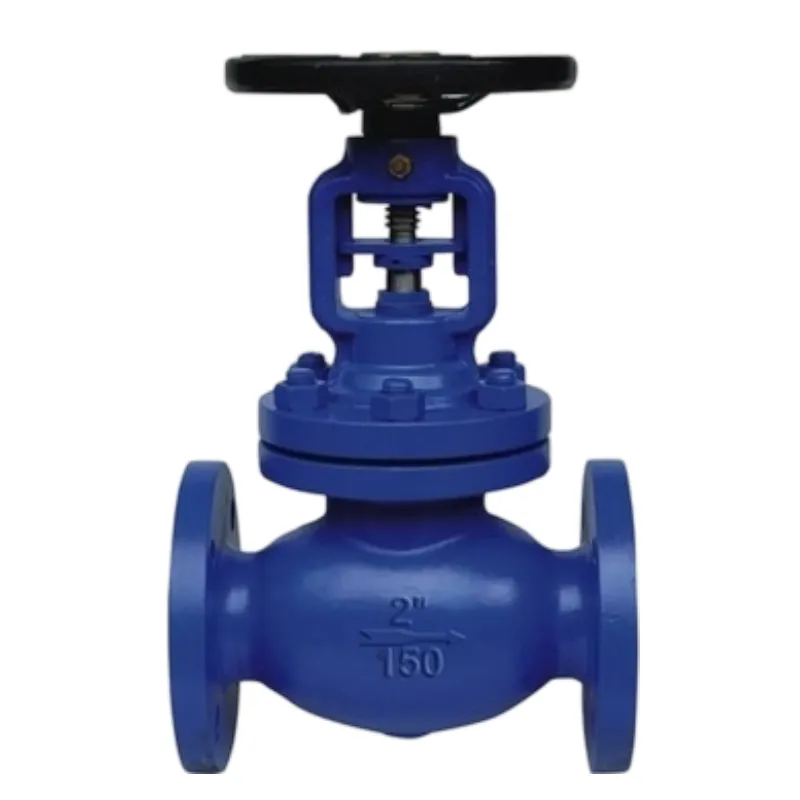
A globe valve uses a movable closure element, commonly called a disc or plug, and a stationary seat. Unlike a gate valve, which is mainly intended for fully open or fully closed service, a globe valve is designed for controlled throttling. The flow path changes direction inside the body, creating a pressure drop that can be used for stable regulation.
This construction makes a china globe valve suitable for:
In a petrochemical or power facility, flow control is directly connected to production yield, thermal efficiency, equipment protection, and personnel safety. A valve that leaks internally, cavitates, or operates with excessive torque can cause energy loss, unstable process conditions, and unplanned shutdowns. Therefore, a globe valve should be treated as a process-control component, not simply as a pipeline accessory.
Globe valves became widely used as industrial plants moved from simple on-off piping arrangements toward continuous process control. Steam systems were among the earliest major applications because operators needed to manage pressure, temperature, and flow without repeatedly stopping the line.
As petrochemical refining, thermal power generation, and combined-cycle power plants developed, globe valve designs became more specialized. Engineers introduced pressure-balanced trim, renewable seats, hard-facing alloys, bellows seals, extended bonnets, and pneumatic or electric actuators. These features address different operating risks, including fugitive emissions, high differential pressure, thermal cycling, and difficult maintenance access.
Today, China has a broad industrial valve manufacturing base serving domestic infrastructure and international process industries. However, “made in China” does not automatically define performance. The actual quality of a china globe valve depends on metallurgy, machining control, welding procedures, inspection discipline, pressure testing, traceability, and the manufacturer’s ability to match the valve to the process duty.
The title China Globe Valves in Petrochemical & Power Industries: High-Temp, High-Pressure Flow Control Soluti describes a complete engineering requirement. High temperature and high pressure affect every part of the valve, including the pressure boundary, packing, gasket, stem, disc, seat, bonnet, and actuator.
Typical material options may include carbon steel, stainless steel, alloy steel, and other grades selected according to temperature, pressure, corrosion, and fluid composition. For steam and high-temperature service, alloy-steel construction can provide better resistance to creep and thermal stress than standard carbon steel.
Material selection should be supported by documentation such as:
Globe valve trim is exposed to velocity, pressure drop, erosion, and repeated movement. Stainless-steel trim may be appropriate for general corrosion resistance, while hard-faced seat surfaces can improve service life in high-differential-pressure applications.
For severe service, engineers should evaluate:
A standard globe valve may not be suitable for every control duty. Where pressure drop is extreme, a multistage pressure-reducing trim or a dedicated control valve may provide a better technical solution.
In refineries and petrochemical plants, stem sealing is especially important because hydrocarbon and toxic-media leakage can create safety, environmental, and compliance risks. Packing selection must consider temperature, fluid compatibility, stem finish, compression, and maintenance practice.
For applications requiring reduced external leakage, a bellows-sealed globe valve can place an additional barrier between the process fluid and the atmosphere. The final design should be reviewed against the project’s fugitive-emission requirements and applicable plant specifications.
Manual handwheels may be suitable for infrequent adjustment, while pneumatic, electric, or hydraulic actuators are often preferred for remote or automated operation. Actuator sizing should account for:
Incorrect actuator sizing is a common cause of slow movement, incomplete closure, excessive wear, and control instability. Chenyu Valve should receive the operating pressure, temperature, medium, flow rate, line size, pressure class, and actuator requirements before confirming a final configuration.
In refineries and chemical-processing facilities, globe valves are used where operators need repeatable regulation rather than simple isolation. Common services include steam tracing, reboiler lines, process bypasses, hot oil systems, condensate return, and utility headers.
For hydrocarbon service, valve selection must also consider fire safety, antistatic design, emissions control, and compatibility with the process fluid. A china globe valve used on a refinery line should be specified with the correct pressure-temperature rating and sealing arrangement rather than selected only by nominal pipe size.
Power-generation equipment depends on stable control of steam and water. Globe valves are frequently installed on:
In high-temperature steam service, thermal expansion and cycling can affect seat tightness and packing performance. The valve should be installed with suitable supports and alignment, and the plant should follow a controlled warm-up procedure to reduce thermal shock.
Quality claims should be connected to recognized standards and measurable inspection activities. Depending on the project specification, a Chenyu Valve globe valve may be evaluated against standards such as:
| Area | Common reference | Why it matters |
|---|---|---|
| Valve design and pressure rating | ASME B16.34 | Supports design, materials, pressure-temperature ratings, and testing requirements for many industrial valves. |
| Flange dimensions | ASME B16.5 or ASME B16.47 | Helps ensure dimensional compatibility with the piping system. |
| Pressure testing | API 598 or the project-approved equivalent | Defines shell, seat, and backseat test practices for applicable valves. |
| Face-to-face dimensions | ASME B16.10 | Helps prevent installation conflicts and piping rework. |
| Material verification | ASTM material specifications and PMI procedures | Confirms that the supplied alloy corresponds to the purchase specification. |
| Quality management | ISO 9001-based quality systems | Provides a framework for document control, corrective action, and process consistency. |
For critical orders, buyers should request a quality plan covering dimensional inspection, visual examination, material verification, hydrostatic shell testing, seat leakage testing, coating inspection, and documentation review. A robust manufacturing process may target machining precision to 0.01 mm on designated critical dimensions, but the exact tolerance must always be confirmed against the approved drawing and applicable standard.
For high-risk applications, buyers may also require:
Although globe valves are generally better suited to throttling than gate valves, not every design is intended for continuous severe-service control. Excessive pressure drop can cause cavitation, vibration, noise, and rapid trim erosion. The Cv requirement and operating envelope should be calculated before ordering.
A higher class does not automatically solve corrosion, temperature, erosion, or control problems. Pressure class must be checked against the actual pressure-temperature relationship of the selected material. Oversizing can also reduce control sensitivity and increase cost.
Stainless steel can improve corrosion resistance, but compatibility depends on the medium, chloride concentration, temperature, velocity, and stress conditions. Alloy steel, carbon steel with suitable trim, or specialized alloys may be more appropriate in other services.
Hydrostatic testing verifies pressure integrity at the time of testing, but it does not fully predict long-term packing wear, thermal-cycle performance, actuator reliability, or erosion resistance. A trustworthy evaluation combines testing with design review, material traceability, correct installation, and maintenance planning.
Consider a thermal power plant that experiences unstable pressure during boiler start-up. The existing isolation valve provides poor throttling control, causing operators to make frequent manual adjustments. The resulting pressure fluctuations increase thermal stress and slow the start-up sequence.
A properly sized Chenyu Valve globe valve can be engineered for the bypass line with:
The expected business result is not simply “a new valve.” It is more stable steam control, fewer manual interventions, improved start-up repeatability, and lower risk of damage to downstream equipment. Actual performance should be verified through commissioning data, including response time, leakage results, control stability, and operating-cycle history.
Before requesting a quotation for a china globe valve, prepare a complete valve data sheet. This reduces technical clarification, incorrect sizing, and delivery delays.
A professional supplier should review the duty rather than quote only from a line-size description. For complex projects, technical support should include a dimensional drawing, pressure-temperature data, actuator sizing sheet, inspection plan, and final documentation index. A practical service benchmark may include a 24-hour response to technical inquiries, although the actual response commitment should be confirmed in the purchase agreement.
Even a well-manufactured globe valve can fail prematurely if installation is poorly controlled. Before installation, inspect the valve for transport damage, verify the flow-direction arrow, check the nameplate, and remove protective covers only when the piping is ready.
During commissioning, record seat leakage, stem travel, actuator response, packing condition, and process stability. Maintenance teams should inspect packing compression, bonnet-bolt condition, external corrosion, actuator air supply, and abnormal noise or vibration. If the valve is used for continuous throttling, trim inspection should be based on operating cycles and pressure-drop severity rather than calendar time alone.
For procurement teams, the lowest purchase price may not be the lowest total cost. A valve with incomplete documentation, incorrect materials, poor control characteristics, or limited spare-part support can create hidden expenses through rework, commissioning delays, emergency replacement, and production loss.
The China Globe Valves in Petrochemical & Power Industries: High-Temp, High-Pressure Flow Control Soluti approach should therefore include four connected elements:
A globe valve is a precision flow-control device for regulating demanding process media, not merely an isolation valve with a handwheel. In high-temperature and high-pressure service, performance depends on the complete design: pressure boundary, trim, sealing system, actuator, materials, testing, and installation.
Chenyu Valve can be evaluated as a potential industrial valve partner by reviewing its drawings, material records, test procedures, inspection coverage, and project references. When selecting a china globe valve, buyers should define the process duty clearly, require applicable standards such as ASME B16.34, API 598, ASTM material specifications, and ASME B16.5, and confirm measurable quality evidence such as 0.01 mm critical machining control, 100% pressure inspection where specified, and documented technical response times.
For engineers, EPC contractors, and procurement managers exploring China Globe Valves in Petrochemical & Power Industries: High-Temp, High-Pressure Flow Control Soluti, the next step is to prepare a detailed valve data sheet and request a configuration review. The right specification can improve control accuracy, plant safety, equipment life, and long-term operating value.
A: Key factors include material selection for pressure resistance, trim design for throttling performance, and ensuring the valve meets the specific pressure and temperature ratings outlined in your project specifications.
A: Chenyu Valve employs rigorous testing against recognized standards, including material verification and 100% pressure testing for critical orders, to ensure long-term reliability and performance.
A: Yes, Chenyu Valve offers customizable solutions tailored to your requirements, including material selection, actuator types, and testing protocols to match your operational conditions.
A: Consider the fluid compatibility, temperature ranges, and potential exposure to corrosive chemicals when selecting a valve. Proper material selection and sealing systems are crucial for preventing leaks and ensuring safe operation.
A: For procurement, provide a complete valve data sheet that includes medium type, operating conditions, connection types, material requirements, and testing and maintenance plans to ensure accurate sizing and delivery.
Related News

Aug. 14, 2026
Related Products
Navigation
Navigation
Contact Us
Contact Us
E-mail: abby_zcyvalves@zcyvalve.com
Mobile: +86 133 9699 8344
WeChat: +86 158 8872 1646
WhatsApp: +8615888721646
Add.: Room 401, 4F, NO.1017, JinHai 3rd Avenue, Kong Gang New Zone, Yong Xing Street, Long Wan District, Wen Zhou City, Zhe Jiang, P.R. China.


