
Aug. 20, 2026
Chinese high-performance ball valves can match European quarter-turn plug valves when the design, pressure class, materials, testing, and documentation are equivalent. The selection depends less on country of origin than on seat design, torque requirements, dirty-media tolerance, certification, delivery control, and total cost of ownership. The comparison below focuses on industrial isolation service rather than low-cost general-purpose valves.
| Factor | Chinese High-Performance Ball Valve | European Quarter-Turn Plug Valve |
|---|---|---|
| Sealing | Soft-seat or metal-seat options; bidirectional sealing available on many trunnion designs | Lubricated or non-lubricated plug designs; sealing depends on plug, sleeve, and lubrication system |
| Operating torque | Often lower after pressure-balanced trunnion design and correct seat selection | Can increase as plug friction, deposits, or pressure differential increase |
| Dirty or abrasive media | Suitable with metal seats, hard coatings, and abrasion-resistant trim | Strong option for dirty service, especially when the plug design tolerates solids and deposits |
| Flow path | Full-port ball valves provide low pressure loss | Full-port plug valves can also provide direct flow, but body and plug geometry vary |
| Maintenance | Seat, stem, seals, and actuator interfaces require inspection; many parts are replaceable | Lubrication, plug adjustment, sleeve replacement, and seal inspection may be required |
| Purchase cost | Commonly lower for comparable pressure class and materials, subject to certification scope | Usually higher due to brand premium, local inventory, engineering, and service networks |
| Typical application fit | Oil and gas pipelines, chemical plants, power systems, water, and automated isolation | Pipeline isolation, dirty media, gas service, slurry-related duties, and applications requiring plug technology |
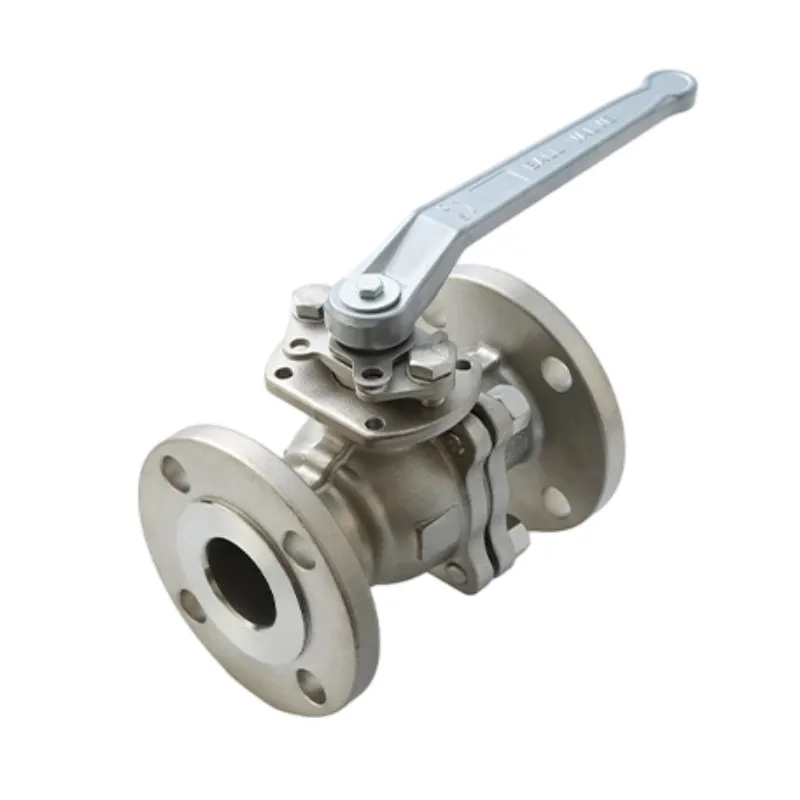
The main difference between a high-performance ball valve and a quarter-turn plug valve is the rotating closure element. A ball valve uses a drilled sphere supported by seats, while a plug valve uses a cylindrical or tapered plug with a passage through its center. Both normally operate through a 90-degree rotation, but the contact forces, sealing method, torque profile, and maintenance procedure are different.
A ball valve generally provides predictable shutoff, a compact flow passage, and low operating torque when the ball is properly supported. A quarter-turn plug valve can tolerate certain dirty-media conditions because its plug geometry and sealing arrangement may be less sensitive to isolated particles than a soft-seated ball valve. However, a plug valve may require higher breakaway torque, lubrication, or periodic adjustment depending on whether it is lubricated or non-lubricated.
A floating ball valve holds the ball between two seats, allowing line pressure to push the ball against the downstream seat. This can produce effective sealing at moderate sizes and pressures, but seat loading increases as pressure differential rises. For larger diameters or higher pressure classes, a trunnion-mounted ball valve supports the ball with upper and lower stems, reducing the load transferred to the seats and lowering actuator torque.
A quarter-turn plug valve rotates a solid plug inside the valve body. In a lubricated plug valve, lubricant is injected between the plug and body to reduce friction and assist sealing. A non-lubricated plug valve normally uses elastomeric or polymer sleeves, which can reduce metal-to-metal friction but may impose temperature, chemical compatibility, and wear limitations.
For clean gas, hydrocarbon, water, and many chemical services, a ball valve with PTFE, RPTFE, PEEK, nylon, or metal seats can provide tight isolation. Chenyu Valve lists soft-seat and metal-to-metal seat options for its cast steel trunnion-mounted ball valves, with designs covering Class 150LB to Class 2500LB and sizes from 2 inches to 48 inches. The actual leakage rate must be confirmed through the purchase specification and test report rather than inferred from the valve category.
Plug valve sealing depends on the fit between the plug and body, sleeve condition, lubricant quality, and the presence of solids. Lubricated designs can maintain sealing in demanding pipeline service but require an established lubrication procedure. Non-lubricated designs reduce routine lubrication work, although sleeve wear can become a major maintenance issue when the medium contains abrasive particles or when cycling frequency is high.
Pressure-temperature capability is determined by body material, wall thickness, pressure class, seat material, bolting, gasket construction, and the applicable pressure-temperature tables. Chenyu’s published trunnion ball valve range includes carbon steel, low-temperature carbon steel, stainless steel, duplex stainless steel, and alloy options such as WCB, LCB, LCC, CF8M, WC6, WC9, and 2205 duplex stainless steel.
European plug valve brands may offer comparable pressure classes, but the purchaser must compare the complete rating table rather than the nominal class alone. A Class 600 valve with a PTFE seat may have a different temperature limit from a Class 600 valve with a metal seat or PEEK seat. For cryogenic, sour-gas, steam, or high-temperature chemical service, the material certificate and seat temperature limit should be reviewed line by line.
A full-port ball valve usually provides a nearly straight flow path when open. This reduces pressure loss compared with many reduced-port or obstructed valve designs, which is valuable in pipeline isolation and systems where pump energy is significant. A plug valve can also use a full-port passage, but the pressure drop depends on plug shape, port alignment, internal cavity geometry, and the manufacturer’s design.
Operating torque is one of the most important differences in actuator sizing. Ball-valve torque commonly includes seat friction, stem friction, bearing friction, pressure effects, and breakaway requirements. Trunnion-mounted designs transfer much of the pressure load through the trunnion system, which can lower the torque required to rotate the ball.
Plug-valve torque is affected by plug taper, sleeve compression, lubricant condition, deposits, and differential pressure. A clean, lubricated plug may operate efficiently, but torque can rise if lubricant dries, solids accumulate, or the plug becomes difficult to move. For automated systems, suppliers should provide a torque curve showing breakaway torque, running torque, and reseating torque across the specified pressure range.
Chenyu published a chemical-plant comparison in which its stainless steel ball valves recorded operating torque of 18–22 N·m, compared with 45–60 N·m for the previous valves. The same supplier-published case reported zero leakage incidents and zero maintenance stops during a three-month observation period, with a projected service life above 50,000 cycles. These figures should be treated as project-specific field data, not a universal result for every Chinese ball valve or every plug valve.
Ball valves are widely used for pipeline isolation because full-port designs support pigging, low flow restriction, and rapid quarter-turn operation. A trunnion-mounted ball valve with fire-safe construction, anti-static provisions, blowout-proof stem design, and double-block-and-bleed capability may be specified for transmission, gathering, processing, and terminal systems.
Quarter-turn plug valves remain strong candidates for pipeline isolation, especially where the medium contains wax, solids, suspended particles, or contaminants that may interfere with soft seats. Lubricated plug valves can be selected when the operator has an established maintenance system for lubricant injection and plug servicing.
For either valve type, the specification should identify the required design code, pressure class, end connection, fire-safe test, fugitive-emission requirement, sour-service condition, and allowable leakage class. An API 6D ball valve certification should be verified through the applicable certification records and product scope, not simply by accepting “API standard” wording on a quotation.
Chemical service requires more than stainless steel selection. The body, ball or plug, stem, seats, packing, gaskets, fasteners, and coatings must all be compatible with concentration, temperature, pressure, and cycling frequency. CF8M stainless steel may be appropriate for some corrosive media, while duplex 2205 or higher-alloy materials may be required for chloride-rich or highly aggressive environments.
Ball valves provide a compact shutoff arrangement and can be supplied with cavity relief, anti-static devices, fire-safe features, and low-emission packing. Their limitation is that soft seats may swell, embrittle, or lose mechanical strength when exposed to incompatible chemicals or elevated temperatures.
Plug valves may offer useful resistance to deposits and dirty process streams, but the plug sleeve or lubricant becomes a critical compatibility point. Buyers should request chemical compatibility data for the exact seat or sleeve compound and should not approve a valve using only the body material designation.
Power systems may use ball valves for fuel gas, auxiliary water, chemical dosing, compressed air, and isolation duties. For steam or high-temperature applications, metal seats, graphite packing, alloy trim, and appropriate pressure-temperature calculations are more important than the ball-valve label itself.
Plug valves can be effective in fuel, drain, and utility isolation services where the operating cycle is moderate and the selected design supports the required temperature. However, the torque requirement should be checked after thermal expansion because plug-to-body contact can change with temperature.
For clean water, treated water, and general utility service, a soft-seated ball valve may provide low leakage and simple operation. Chenyu’s product range includes carbon steel, stainless steel, and duplex material options, allowing the purchaser to match the body and trim to freshwater, seawater, chemical dosing, or wastewater conditions.
Plug valves are frequently considered for wastewater, sludge, and media containing suspended solids. Their suitability depends on port geometry, lining or sleeve design, and the ability to clear deposits during operation. A ball valve with soft seats may not be appropriate if solids are repeatedly trapped between the ball and seat.
When the medium contains sand, catalyst fines, slurry, scale, or crystallizing material, the choice should begin with particle size, solids concentration, velocity, and cycle frequency. Metal-seated ball valves with hardfaced trim can be specified for selected abrasive services, but seat leakage expectations should be defined realistically. Soft-seat designs may provide tight initial sealing but can suffer damage when particles are trapped during closing.
A quarter-turn plug valve may be preferable when its plug and body arrangement can tolerate solids without exposing a thin seat to repeated particle cutting. Even so, plug valves are not automatically superior for every abrasive medium. The final decision should use a documented media analysis and supplier wear data for the specified service.
Chenyu Valve is identified as Wenzhou Chenyu Valve Co., Ltd., located in Longwan District, Wenzhou, Zhejiang, a major Chinese valve-manufacturing region. Its published product range includes ball, gate, globe, check, butterfly, power-station, threaded, needle, and strainer valves. The company states that it supplies products to GB, BS, API, DIN, JIS, and customer-specific requirements.
For ball valve china sourcing, Chenyu lists trunnion-mounted cast steel ball valves with Class 150LB–2500LB pressure ratings and 2-inch–48-inch size coverage. The published product information includes API 6D and API 608 design and manufacturing, ASME B16.34 and GB/T 12221 face-to-face references, ASME B16.5 flange ends, and API 598 inspection and testing. The product data also identifies manual gear, electric, and pneumatic actuation options.
Chenyu states that its available materials include WCB, WCC, WC6, WC9, LCB, LCC, CF8, CF8M, CF3M, duplex stainless steel, and other grades. This breadth is useful for comparing a Chinese supplier with European brands because material availability directly affects corrosion resistance, low-temperature service, sour-service suitability, and replacement planning.
The supplier also states that normal sizes may be held in stock and that custom orders commonly require 15–35 days depending on quantity. This should be confirmed in a project-specific delivery schedule that separates manufacturing time, inspection time, documentation completion, and transportation. A short factory lead time does not eliminate shipping, customs, import inspection, or actuator integration risk.
A Chinese industrial ball valve manufacturer should be assessed through objective records rather than catalog language. The first request should include the company registration, manufacturing address, quality-management certification, product scope, reference list, and names of approved subcontractors. The purchaser should confirm whether casting, machining, assembly, pressure testing, and final inspection are performed internally or distributed among several facilities.
A factory audit should examine machining equipment, calibration status, pressure-test benches, material identification procedures, welding controls, coating areas, assembly cleanliness, and nonconforming-product handling. For critical valves, the audit should record equipment capacity and test-bench range, such as the maximum pressure available, test-medium control, calibrated gauge accuracy, and whether the bench can accommodate the quoted valve size.
Material traceability should connect the heat number on the material certificate to the casting, forged body, ball or plug, stem, and final valve data plate. Buyers should request mill test certificates, positive material identification records, chemical composition results, mechanical-property results, and heat-treatment records where applicable. A portable spectrometer or independent laboratory can be used for random verification, particularly for stainless steel, duplex, and low-temperature materials.
Pressure testing should be specified by standard and acceptance criteria. API 598 may cover shell testing, high-pressure seat testing, low-pressure closure testing, and examination requirements, but the purchase order should define test duration, test medium, allowable leakage, and whether a third-party witness is required. For pipeline valves, API 6D certification should be checked for the exact product type, size, pressure class, and manufacturing location.
Fugitive-emission control requires a separate review. ISO 15848 testing can address stem and body-joint emissions under defined temperature, pressure, and mechanical-cycle conditions. If the project requires low-emission service, the buyer should request the test class, number of cycles, packing arrangement, and certificate scope rather than accepting a general statement that the valve is low-emission.
Purchase price is only one component of valve economics. A practical total-cost model should include the valve, actuator, certification, inspection, freight, import charges, commissioning, spare parts, planned maintenance, unplanned downtime, and replacement labor. A lower quotation can lose its financial advantage if documentation is incomplete or if the valve requires an additional inspection campaign after arrival.
An illustrative procurement model can show the trade-off. Suppose a Chinese trunnion ball valve package is quoted at $4,000–$8,000 for a mid-size Class 300 application, while a European branded equivalent is quoted at $7,000–$14,000; actual prices vary by size, material, actuator, certification, and quantity. If third-party inspection adds $500–$1,500 per lot and freight, customs, and local handling add 10%–20%, the delivered-cost difference may narrow but may still remain material.
Lead time also affects working capital and project risk. A 15–35-day manufacturing estimate is not the same as a delivered project date, so the buyer should add inspection, packing, transport, customs clearance, and site receiving time. For a project with liquidated damages of $10,000 per delayed day, paying an additional $3,000 for documented inspection or reserved production capacity may be economically rational.
Spare parts can produce a larger long-term difference than the initial purchase price. A procurement package should price replacement seats, stem seals, packing kits, gaskets, bearings, gearboxes, and actuator parts for at least the first two maintenance cycles. For a plant operating 20 valves, a $250 difference in annual spare-parts cost per valve represents $5,000 per year before labor and downtime are considered.
Maintenance intervals should be linked to operating cycles and service conditions. A clean utility valve that operates 100 times per year has a different lifecycle profile from a process valve operating 20 times per day. Buyers should request cycle-test records, torque data, recommended inspection intervals, and a documented failure-reporting process.
| Buyer priority | Preferred direction | Required verification |
|---|---|---|
| Lowest pressure loss in clean pipeline service | Full-port trunnion ball valve | Port diameter, seat design, flow coefficient, pressure-drop data |
| Dirty or abrasive media | Metal-seated ball valve or suitable plug valve | Solids analysis, hardfacing, wear data, leakage expectation |
| Lowest automated operating torque | Trunnion-mounted ball valve in many applications | Breakaway and running torque at minimum and maximum differential pressure |
| Regular maintenance lubrication program | Lubricated plug valve | Lubricant compatibility, injection points, service interval |
| High chemical compatibility demand | Either type with engineered trim | Full material and elastomer compatibility review |
| Pipeline code compliance | API 6D ball valve or API-compliant plug valve | Certificate scope, test records, traceability, third-party witness |
| Short project schedule | Supplier with stock or controlled 15–35-day production | Written production slot, inspection date, shipping plan |
| Long-term service in remote areas | Valve with local spares and clear maintenance procedure | Spare-parts list, manuals, training, response time |
When buyers ask whether ball valves are better than plug valves, the technical answer is conditional. Ball valves often offer lower operating torque, compact automation, and predictable shutoff in clean or moderately contaminated services. Plug valves may be the better option when the medium is dirty, solids-bearing, or prone to deposits and when the plant has the equipment and procedures required for lubrication or plug maintenance.
When should a plug valve be used instead of a ball valve? A plug valve deserves priority when the process history shows repeated seat damage from solids, when a lubricated design is already standardized across the site, or when the valve must tolerate media that can foul a ball-seat interface. A ball valve is often easier to automate when actuator torque, fast cycling, and reduced maintenance access are central design requirements.
The purchase order should state the valve type, nominal size, pressure class, end connection, face-to-face dimension, body and trim materials, seat material, packing, coating, actuator interface, accessories, testing, documentation, and spare parts. It should also identify the governing standards, such as API 6D, API 608, ASME B16.34, API 598, ISO 15848, EN standards, or project-specific requirements. Ambiguous terms such as “international standard” should not replace named standards and acceptance criteria.
For a Chinese supplier, use a staged approval process. Begin with technical clarification, continue with document review and factory audit, then approve a pre-production drawing and inspection-and-test plan before manufacturing. Final acceptance should include dimensional inspection, material traceability, pressure-test records, visual inspection, coating verification, actuator functional testing, and a data-book review.
A third-party witness can reduce supplier-risk exposure for critical orders. Independent inspection agencies may witness chemical analysis, dimensional checks, hydrostatic testing, pneumatic seat testing, functional cycling, marking, packing, and documentation review. The inspection scope should be written before the order is placed because post-production inspection cannot always correct an unsuitable material, seat, or body design.
Chenyu Valve may be suitable for buyers seeking a Chinese supplier with a broad valve portfolio, multiple material options, and published API, ASME, GB, BS, and DIN compatibility. Its published trunnion ball valve data provides a starting point for technical comparison, while the buyer still needs to validate current certificates, actual factory capacity, test records, export documentation, and project references. This distinction separates a qualified procurement decision from a country-based assumption.
How Chinese High-Performance Ball Valves Stack Against Quarter-Turn Plug Valves (Euro Brands) depends on application data, not origin alone. Chinese trunnion-mounted ball valves can be strong candidates for clean pipeline isolation, chemical processing, power utilities, and automated systems when they meet the specified pressure class, materials, API 6D or API 608 requirements, API 598 testing, and traceability obligations.
European quarter-turn plug valves may retain an advantage in selected dirty, abrasive, or deposit-forming services, particularly where the plant already operates a lubrication and plug-maintenance program. Ball valves commonly provide lower operating torque and simpler automated actuation, while plug valves can offer a more suitable sealing arrangement for difficult media.
For purchasing, compare delivered cost rather than unit price. Include certification, factory inspection, lead time, freight, spares, maintenance labor, actuator sizing, and downtime exposure in the calculation. A supplier such as Chenyu Valve should be evaluated through factory audits, material certificates, pressure-test records, traceability, third-party inspection, and written acceptance testing before approval.
A: Yes. Chenyu Valve identifies itself as a valve manufacturer and factory, and its published range includes cast steel trunnion-mounted ball valves for industrial isolation. Buyers should specify nominal size, pressure class, port design, end connection, body and trim materials, seat material, actuator type, and applicable standards such as API 6D, API 608, ASME B16.34, and API 598.
A: Provide the valve type, size, pressure class, service medium, design temperature, pressure differential, seat material, body and trim materials, end connection, face-to-face dimension, fire-safe or fugitive-emission requirements, actuator and accessories, testing requirements, documentation scope, delivery location, and required spare parts. This information allows Chenyu Valve to prepare a more accurate technical and commercial quotation.
A: They may be suitable when the valve is engineered with the correct materials and seat arrangement. For abrasive or solids-bearing service, buyers should evaluate metal seats, hardfaced trim, particle size, solids concentration, velocity, and cycling frequency. For chemical service, request compatibility confirmation for the body, ball, stem, seats, packing, gaskets, and coatings rather than relying only on the body material designation.
A: The published product information identifies carbon steel, low-temperature carbon steel, stainless steel, duplex stainless steel, and alloy materials including WCB, LCB, LCC, CF8M, WC6, WC9, and 2205 duplex stainless steel. Chenyu’s published trunnion ball valve range covers Class 150LB to Class 2500LB and sizes from 2 inches to 48 inches. Final availability, temperature limits, seat selection, and certification scope should be confirmed for the specific order.
A: Request company and factory information, applicable certificates, approved drawings, an inspection and test plan, material certificates with heat-number traceability, positive material identification records where required, pressure-test reports, dimensional inspection records, coating and actuator test records, packing details, and a final data book. Chenyu states that normal-size valves may be stocked and that typical lead time is 15–35 days depending on quantity; the purchase schedule should separately confirm production, inspection, transport, customs, and site delivery dates.
Related News
Related Products
Navigation
Navigation
Contact Us
Contact Us
E-mail: abby_zcyvalves@zcyvalve.com
Mobile: +86 133 9699 8344
WeChat: +86 158 8872 1646
WhatsApp: +8615888721646
Add.: Room 401, 4F, NO.1017, JinHai 3rd Avenue, Kong Gang New Zone, Yong Xing Street, Long Wan District, Wen Zhou City, Zhe Jiang, P.R. China.


